Food Science and Human Nutrition


About us

Faculty

Degree Programs
  
Resources

News and Events

Professional Activities

Student Activities

 
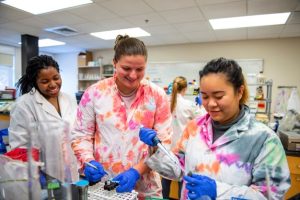
Woman working in lab

Distance Graduate Certificate in Foods and Nutrition

Required Courses | Admission Requirements

This new program is designed to provide professionals working in education, healthcare, food processing and other fields with a background in foods and nutrition. Students may choose to emphasize either food science or nutrition courses in the curriculum, or take a blend of courses. Courses offered via the Internet provide students with flexible learning schedules to accommodate family and work obligations.
spacer

  Educational Objectives
Students will identify legal issues regarding food safety and nutrition labeling and be able to locate current information on relevant regulatory statutes.

Students will be able to select food production and processing methods that maximize nutrient retention and food safety.

Students will utilize course electives to strengthen competencies in an area of interest to each individual.

Required Courses:
  • FSN 436 Food Law
  • FSN 603 Nutrients and Food Processing
Plus 9 credits of electives drawn from FSN courses at the 400, 500 and 600 level that are selected with the assistance of the certificate coordinator to meet students’ professional and personal interests.

The program requires a minimum of 15 credit hours of FSN courses, of which not more than 7 credits may be taken at the 400-level. Courses below the 400-level cannot be used for credit in the program. No more than 3 credits may be taken as FSN 581 Special Topics.

Students must have taken the prerequisite courses, or obtain the instructor's permission to enroll in each course.

Certificate students may also enroll in courses offered in Orono during the day and evening.

Course Descriptions

FSN 436 Food Law. Examination and discussion of federal and state laws and regulations applying to the processing, handling, distribution and serving of food products. 3 cr. Offered every spring semester via First Class (web).

FSN 502 Food Preservation. Chemicals and processes (freezing, dehydration, canning, irradiation, extrusion) used to extend food quality and safety. 3 cr. Offered fall, even years, via WebCT.

FSN 514 Principles of Thermal Processing. Principles of processing of low-acid canned foods and acidified foods, including an understanding of thermal process schedules, types of processing equipment, sanitation and spoilage of thermally processed foods. 1 cr. Offered summer 2010 via WebCT.

FSN 524 Research Methods & Biostatistical Techniques. Evaluates research design and statistics used in the areas of nutritional and medical research. 3 cr. Offered ever fall via WebCT.

FSN 603 Nutrients & Food Processing. Review of the changes in food nutrient composition and bioavailability during processing from harvest to consumers. 3 cr. Offered spring, 2010 and summer, 2011 via WebCT.

As other courses become available, they will be added to this list. For a complete list of courses taught by the Department of Food Science and Human Nutrition, please visit the Department’s course list page.

About us | Faculty | Degree Programs | Resources | News and Events | Professional Activities | Student Activities | Home

© Copyright Department of Food Science and Human Nutrition, 2004 - 2008